The Pros and Cons of Working from Home (backed by reputable scientific research)

A short summary
- Working From Home (WFH) has seen tremendous growth in popularity in recent years, with 28% of UK workers working in a hybrid environment.
- Positives of WFH are: Increased well-being, an average of 1.126 tonnes of CO2 saved per year, greater flexibility, more productivity and more individual control. Also, in a fully remote setup, you can earn a UK income, but can live in a cheaper country.
- Negatives of WFH are: Temptation to overwork, higher rates of loneliness and potential miscommunications.
- Verdict: Working from home works best when you are intentional about your setup, routine and how you manage your time.
Introduction

During the COVID-19 pandemic, Working From Home (or short WFH) has changed from a niche benefit to a global phenomenon (Leonardi, Parker and Shen, 2024). Nowadays, in the UK, more than a quarter of workers (28%) follow a hybrid setup, meaning they split their time between working from home and travelling to work (ONS, 2025). It is safe to say that what used to feel like a niche setup is now something many professionals actively seek out.
With more people considering remote work, there is also a new wave of trying to figure things out. I have been working myself remotely for almost a decade, and if I am honest, I wish someone had clearly shown me the positives and negatives of wfh before having to experience it once I was already in it.
So that is what this guide is for. Everything you need to know about the pros and cons of working from home, in one place. All backed with reputable scientific evidence. Perfect as a resource for journalists wanting trustworthy sources of remote work in one place. If you find it useful, feel free to share it or drop us a message with your own take.
The Advantages of Working From Home
Avoid Commuting

The biggest, most palpable benefit of working from home is that you can finally scratch commuting off your already list of daily hassles. No commute means more time for family, quick chores, or enjoying a better work-life balance (Loi and Baid, 2025).
According to GOV.UK (2024), the average commute in Great Britain is close to an hour a day, which adds up to over 200 hours a year or about nine full days of your life given back to you. If you think about it, that is nearly two weeks you could spend on vacations, upskilling through a mini-course or simply taking a proper break in peace.
Also, Caulfield and Charly (2022) highlight with their research that employees working from home 3 days a week for a year save on average 1.126 tonnes of CO2, which is a significant amount of greenhouse emissions. To put this in perspective, 1.126 tonnes of CO2 are around 3000 - 4000 kilometres for an efficient petrol car (Caulfield and Charly, 2022), which equals a trip from London to Istanbul and back! In this way, WFH can have a tremendous positive environmental impact.
Furthermore, the ONS (2025) reports that transport costs account for 15% of household spending in the UK. That means, apart from saving time, working from home can help employees save on transportation and food expenses.
You Get Your Time Back

Apart from commuting, you also cut out a surprising amount of small, time-draining rituals that eat into your day.
Deciding what to wear, getting ready in a rush, navigating office routines that do not move your work forward (case in point: that 30-minute office meeting that could have been a two-line email). None of these feels big on their own, but they save a few minutes here and there, and you are reclaiming hours of your life that were previously locked into autopilot.
Getting your time back working remotely is especially a big relief for parents, as they can take care of their children at home in breaks, finish household chores, and enjoy more time with their loved ones (Mishra and Sharma, 2022). Or to quote the participant of the research of Orzeł and Wolniak (2022), "I do not waste time on commuting and chatting, I finish my work at the same time with more orders, or I have time off before".
More Control Over Your Work Environment
In an office, you are bound by 'default' arrangements, including temperature, noise levels, lighting, and the layout. Oftentimes, even who you are sitting next to.
On the other hand, WFH offers comfort and privacy by letting you work in your own space. You can set up and decorate your desk to something straight out of Pinterest, or fully replace it with an adjustable height desk and add in a walking pad so you are not glued to your chair all day.
If you prefer working completely remotely and are legally allowed by your employer, researchers from Harvard have proven that working from anywhere has a 4.4 per cent increase in output in comparison to working from home (Choudhury, Foroughi and Larson, 2021). So consider working from a quiet cafe overlooking Portugal's coastline or write on your laptop in your comfy bookstore in a relaxing area in Tokyo.
More Control Over Your Schedule
I would go as far as saying working from home gives you the opportunity to design not just a schedule, but a lifestyle. Instead of fitting life around work, you start fitting work into your life, at least to some degree.
Many people I know in creative fields have certain times of the day when they are in 'flow state,' so they might do their most demanding work at night, attend meetings during the day and fit in things like going to the gym or running errands midday.
A work-from-home setup lets you see what's possible when your day isn't boxed into the usual nine-to-five rhythm. In fact, research has found that employees are more productive when working from home (Cho, Dormann and Allen, 2014; Kniffin et al., 2021).
Avoid Office Politics and Drama
For those who just want to clock in, do a job well done and clock out, office drama is one of those things that consumes mental space for no good reason.
In fact, findings from a study of 601 employees show that perceptions of workplace politics can negatively affect job satisfaction, with older employees and female employees in certain situations being more impacted (Snipes et al., 2024).
Working from home lets you avoid being pulled into these typical office dynamics simply by not being in the room where it all plays out. Why bother when it is not part of your job description anyway?
Improve Overall Health & Wellbeing
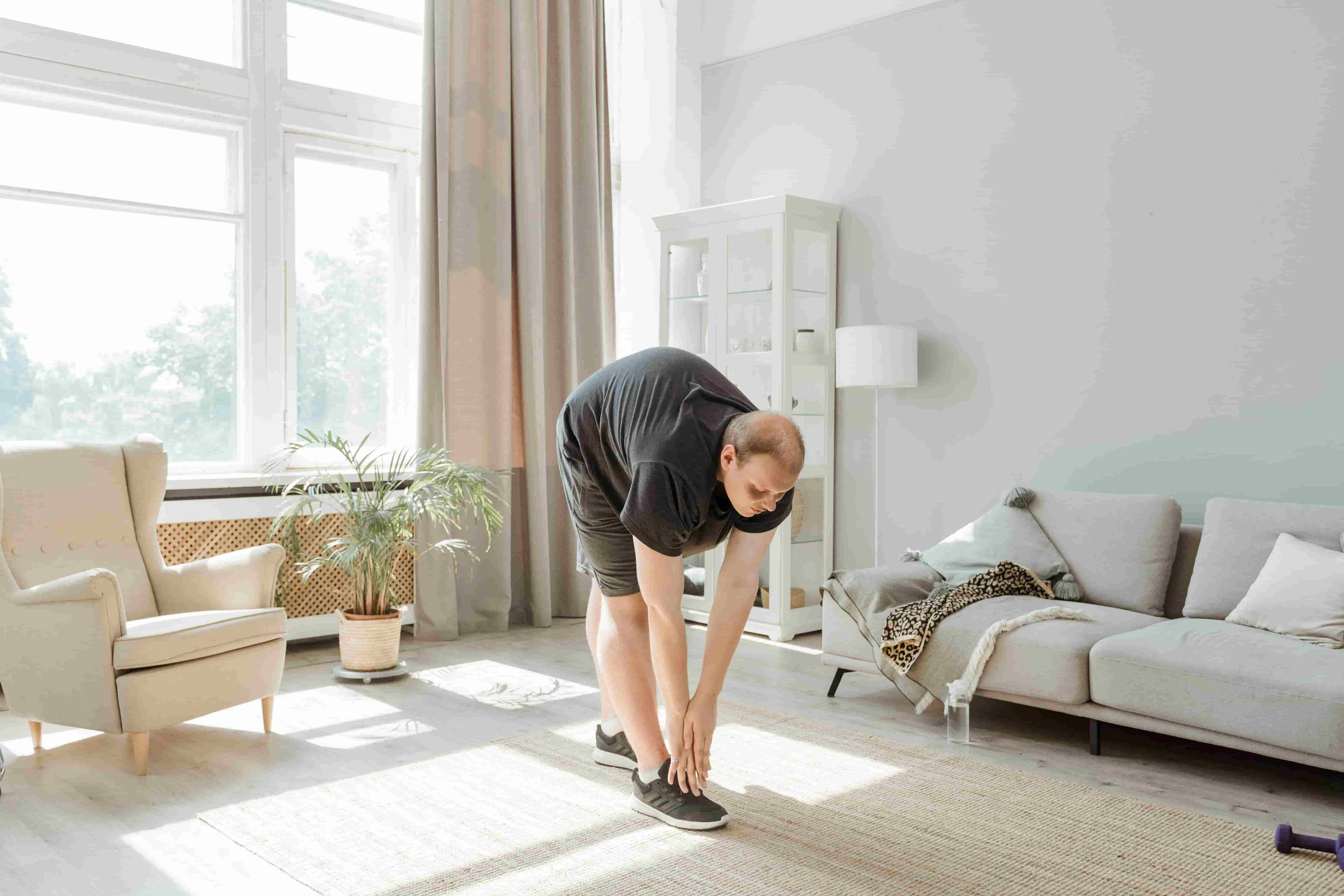
Research from the CIPD found that the most frequently mentioned benefit of homeworking is increased well-being through avoiding the commute, followed by improved well-being due to greater flexibility of hours.
On a personal note, a big reason why I am a huge WFH advocate is that I have a condition called cystic fibrosis, which makes me more susceptible to getting sick or infected, especially from crowded workplaces and commutes. And since I work from home, I have had far fewer close-contact situations that would normally put me at risk and make me sick.
Of course, it is not limited to just physical health. As we spoke about office drama earlier, working from home lets you avoid that and stay away from toxic environments that can affect your mental health. On the brighter side, you get more time with your kids and promote your Corgi, Labrador or British Shorthair to full-time office assistants, no executive sign-off needed.
People should have the opportunity to work from home for whatever reason, but all the more if that reason is health.
Opportunity to Earn More

When you work completely remotely, your earning potential is not tied to where you are located anymore. You can pursue global opportunities that pay more or relocate to a lower cost-of-living area and keep more of what you earn. Either way, it is a win-win. According to researchers from Sheffield, remote work is concentrated among high earners, which has seen especially in the past few years substantial increases in compensation (De Fraja et al., 2024).
Browse through RemoteCorgi's job board, and chances are you'll find plenty of high-paying remote roles to choose from.
The Disadvantages of Working from Home
Temptation to Overwork
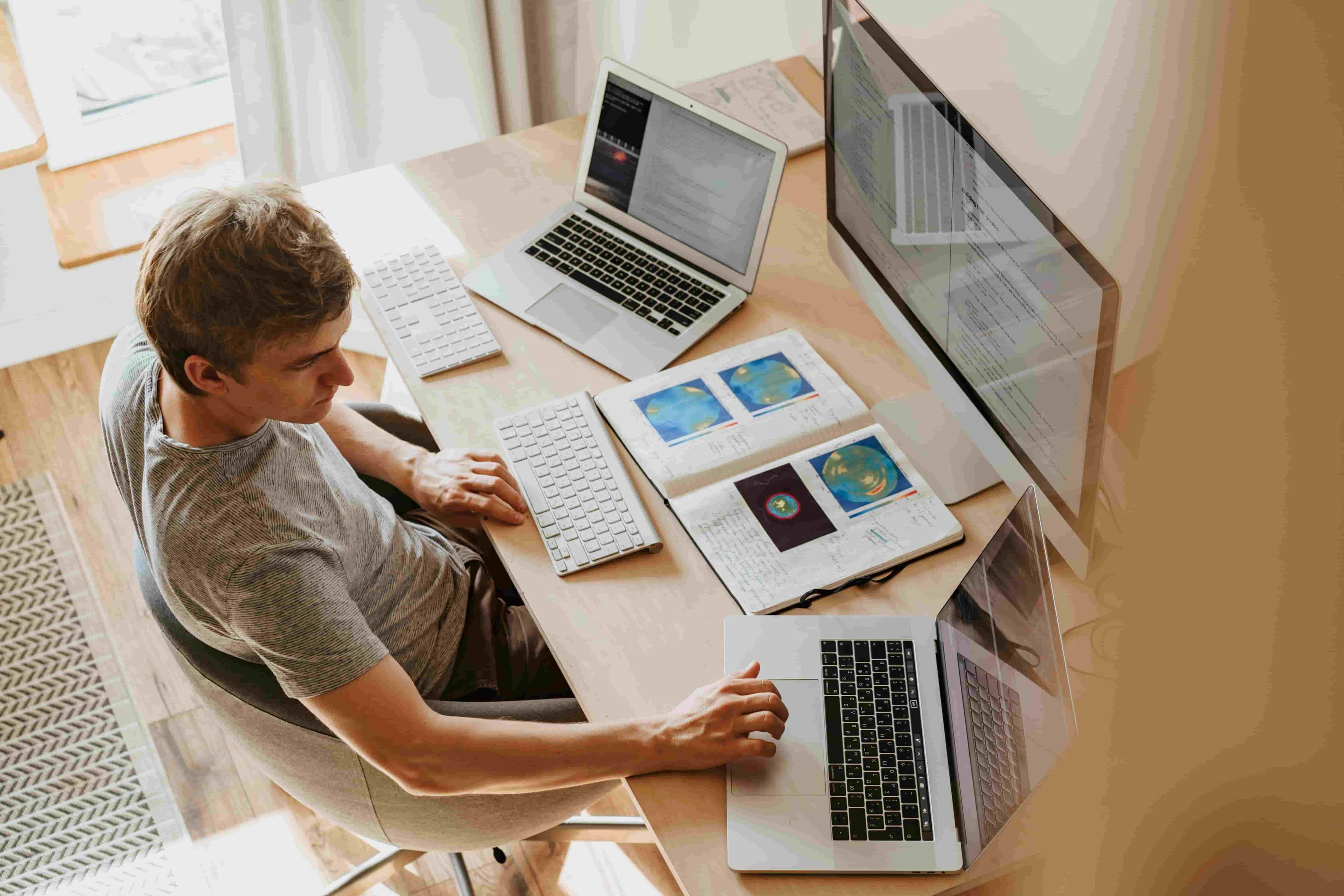
A review published by Hall et al. (2024) found that home-based workers reported working longer periods without breaks, including more work during evenings and weekends, compared to when they were in the office.
It is not surprising to see why this happens for many people working from home. Among the many factors at play, one is space constraints. If you live in a small flat, it can be difficult to separate work from life when the same space is used for both productivity and relaxation.
Research highlights this blurring (e.g., Junker et al., 2025; Loi and Baid, 2025), where WFH often lacks clear boundaries between work and free time. Additionally, notifications outside work hours can easily intrude on your personal time.
For others, it comes down to poor scheduling or simply not having a routine in place. If you do not make an effort to set strict boundaries between work and life, your days can silently turn into a cycle of work, sleep, eat and repeat, creating the perfect conditions for burnout. To set clear boundaries is one of my personal struggles. This is why, out of personal protection to myself, I do not download Microsoft Teams, Outlook or any work-related apps on my personal smartphone.
Isolation

For those who live alone or lack a strong social network, WFH can be isolating. He et al. (2025) report that fully remote employees experience higher levels of loneliness (25%) compared to those who work exclusively on-site (16%).
Some people treat work as an important source of social interaction, and, especially for the extroverted, that is how they recharge their social battery. However, even the most introverted of introverts are not immune to the loneliness and isolation that working from home can bring (Chmiel, 2025).
The good news is that you can use the flexibility that working from home gives you to tackle your loneliness intentionally. You can be more deliberate with your time and build connections outside work. Use it to meet friends more often, spend time with family or join a book club, yoga class or any community that keeps you socially engaged.
You Pay Extra for Equipment & Overheads
Working from home often means relying on your own equipment. Other than a laptop, you may need a quality headset, a second monitor and any specialised software required to get your tasks done.
If you do not already have these, you will have to purchase them out of pocket. If something breaks, the cost of repair is on you. And remember, these expenses are on top of ongoing overheads like electricity, internet (sometimes even a backup connection in case your primary one drops), air conditioning and even emergency power.
Of course, this will not always be the case for everyone, but we actually care that the employers we list provide equipment and offer a work-from-home allowance. We also always highlight it in our job and company postings.
New Set of Distractions
Working from home removes many of the usual office distractions, but it introduces a new set of distractions that can blur the line between work and life.
Think about family members or roommates who do not quite respect work-from-home, casually asking you to run errands while you are mid-task. This lack of separation of family life and work from home has been shown to cause increased stress and conflict in families (Yang et al., 2022).
Then there is the bed or couch shamelessly inviting you over while you are trying to focus. Contrary to popular belief, it's not just about being more disciplined. As James Clear, author of the #1 New York Times bestseller Atomic Habits, puts it, 'In the long run (and often in the short run), your willpower will never beat your environment. The more disciplined your environment is, the less disciplined you need to be.'
A simple way to apply this is to position your work desk so your couch or bed is out of sight, or by putting your constantly-pinging phone on a kitchen shelf away from your workstation. Small change, huge impact.
Potential Communication Breakdowns
From a technical perspective, working from home only works well with a dedicated focus space and a stable internet connection. Without these, it can quickly become frustrating, and that frustration often shows up first in how communication breaks down.
Poor internet connection, weak mobile signal (or no signal at all) or your laptop deciding to act up at the worst possible time. These are physical communication barriers that naturally come with working remotely (Ragkhitwetsagul et al., 2025). The tricky part is that you cannot always predict when these issues will arise, but once they do, the damage is already done before things get sorted.
From a social perspective, WFH can be seen as tremendously challenging, as nonverbal cues can easily be misunderstood over a video call. As nonverbal communication is often cited to make up more than 90% of how we understand each other, it is no surprise that nuances get missed (Radford et al., 2025).
Additionally, researchers have shown that remote work has increased asynchronous communication, making it more difficult for employees to learn and receive new information efficiently through their organisation without active actions by their employer (Yang et al., 2022).
What can start out as a small misunderstanding can easily evolve into costly mistakes and delays, and even pull others into the ruckus. Not a good situation to be in, considering how it can impact both your reputation and your chances of getting promoted.
Is Working from Home Right for You?
As they say, if everyone were a great entrepreneur, everyone would be running a business. The same goes for remote work. Knowing whether it is right for you comes down to honest introspection. Start with the questions below:
- Can you manage your time without constant supervision?
- Are you willing to build and stick to your own routine?
- Are you comfortable working with less external structure and more self-direction?
- Can you set strict boundaries so work doesn't take over your day?
- Are you okay with less day-to-day social interaction at work?
- Are you proactive about communication when things are not clear?
- Can you stay productive even when you don't feel like doing it?
- Are you open to redefining your identity and career path if needed?
- Do you understand that work-life balance is not guaranteed; that you create it and adjust as you go?
If you have ticked yes to at least half of these, you're already a good fit. The rest you can build on as you go.
Preparing for a Work-from-Home Transition
If you are thinking about going fully or partially remote, do not rush into it blind and risk drowning in regret later. Get these in place early, so you're not figuring things out the hard way midway through.
- Clear income expectations: Know what fair pay looks like for your role so you do not accept lowball offers just to 'get in' remotely.
- A reliable work setup: Make sure you have the basics. A laptop, stable internet, essential accessories and backup options so you can stay on top of your work even on a bad day.
- Remote-capable skillset: Be honest about whether your expertise can be done remotely, and if not, start exploring roles that are built for it. You can browse remote-ready opportunities directly on our curated job board.
- A support system you can lean on: Maintain your relationship with friends and family. Better yet, join a community of people who are into the same hobbies or interests that take your mind off work.
- An updated, remote-ready CV: Alongside your roles and career highlights, your CV should show the kind of skills that prove you can be trusted to work from home.
To help you secure your next work-from-home role faster, make sure to join our free online workshops. We'll walk you through practical tips and strategies to position yourself for your dream remote job in the UK.
References
Feel free to read more on the referenced scientific research below:
Caulfield, B. and Charly, A., 2022. Examining the potential environmental and travel time saved benefits of remote working hubs. Transport Policy, 127, pp.139-147.
Chmiel, M., 2025. Loneliness, office space arrangement and mental well-being of Gen Z PR professionals. Falling into the trap of an agile office?. Journal of Communication Management, 29(3), pp.379-400.
Cho, E., Meier, L.L., Dormann, C. and Allen, T.D., 2025. Toward a dynamic understanding of work–family boundary management: A control theory perspective. Journal of Occupational Health Psychology, 30(2), p.63.
Choudhury, P., Foroughi, C. and Larson, B., 2021. Work‐from‐anywhere: The productivity effects of geographic flexibility. Strategic Management Journal, 42(4), pp.655-683.
De Fraja, G., Matheson, J., Mizen, P., Rockey, J., Taneja, S. and Thwaites, G., 2024. Remote work and compensation inequality. The Sheffield Economic Research Paper Series (SERPS), 2024008(2024008).
GOV.UK (2024) Transport statistics great britain: 2023 Domestic Travel.
Hall, C.E., Brooks, S.K., Mills, F., Greenberg, N. and Weston, D., 2024. Experiences of working from home: umbrella review. Journal of Occupational Health, 66(1), p.uiad013.
He, T., Wei, L., Goodman, M.S., Pagán, J.A., Cuevas, A.G. and Bather, J.R., 2025. Remote work and loneliness: Evidence from a nationally representative sample of employed US adults. Journal of Affective Disorders, p.120456.
Junker, N.M., Heimrich, J., Häusser, J.A. and Rigotti, T., 2025. The relevance of work-related rumination and boundary control for spillover effects from work to home: results from a diary study. Work & Stress, pp.1-22.
Kniffin, K.M., Narayanan, J., Anseel, F., Antonakis, J., Ashford, S.P., Bakker, A.B., Bamberger, P., Bapuji, H., Bhave, D.P., Choi, V.K. and Creary, S.J., 2021. COVID-19 and the workplace: Implications, issues, and insights for future research and action. American psychologist, 76(1), p.63.
Leonardi, P.M., Parker, S.H. and Shen, R., 2024. How remote work changes the world of work. Annual Review of Organizational Psychology and Organizational Behavior, 11(1), pp.193-219.
Loi, T.I. and Baid, C., 2025. Shifting Grounds: Benefits and Drawbacks of Working from Home and Work Location Variability. In Academy of Management Proceedings (Vol. 2025, No. 1, p. 15417). Valhalla, NY 10595: Academy of Management.
Mishra, A. and Sharma, M., 2022. Work from home: Benefits and challenges. Management Dynamics, 22(2), p.6.
Office for National Statistics. "Who Has Access to Hybrid Work in Great Britain?" Ons.gov.uk, Office for National Statistics, 10 June 2025
ONS (2025) Who has access to hybrid work in Great Britain?, Who has access to hybrid work in Great Britain? - Office for National Statistics.
Orzeł, B. and Wolniak, R., 2022. Digitization in the design and construction industry—remote work in the context of sustainability: a study from Poland. Sustainability, 14(3), p.1332.
Radford, H., Reidinger, B., Kapp, S.K. and de Marchena, A., 2025. "There is just too much going on there": Nonverbal communication experiences of autistic adults. PloS one, 20(7), p.e0325465.
Ragkhitwetsagul, C., Choetkiertikul, M., Palakvangsa-Na-Ayudhya, S., Sunetnanta, T. and Satchanawakul, N., 2025, November. The Impact of COVID-19 and Remote Work on Software Development in Thailand. In 2025 9th International Conference on Information Technology (InCIT) (pp. 265-272). IEEE.
Snipes, R.L., Pitts, J.P., Bryant, P.C., Huning, T.M. and Snipes, A., 2024. Job satisfaction and politics in the modern workplace: an empirical examination of the moderating effects of gender and age on the perception of organizational politics-job satisfaction relationship. Employee Responsibilities and Rights Journal, 36(3), pp.337-365.
Yang, L., Holtz, D., Jaffe, S., Suri, S., Sinha, S., Weston, J., Joyce, C., Shah, N., Sherman, K., Hecht, B. and Teevan, J., 2022. The effects of remote work on collaboration among information workers. Nature human behaviour, 6(1), pp.43-54.