How to Write a Catchy Personal Statement on your CV

Short Summary
- A CV personal statement (also know as personal summary or executive summary) is a sales pitch of your CV.
- It is a 3-5 line summary at the top of your CV that outlines your background, what added value you offer and why you fit the role.
- Given the volume of CVs they have to review, recruiters often scan CVs very quickly. A personal statement acts as a first impression filter that can influence whether your CV gets read further.
- While not mandatory, a well-written personal statement can help you stand out early and improve your chances of getting shortlisted.
- A strong personal statement includes your professional identity, relevant skills, measurable achievements, role alignment and career direction.
- Do tailor your personal statement and use keywords from the job description to demonstrate that your experience aligns with what the employer is looking for.
- Do not use cliches, add irrelevant information and fabricate (or exaggerate) achievements.
- AI can support brainstorming and editing, but the final version should remain specific, accurate and personally written.
Introduction

We all know how difficult it is to get a job that fits. According to the latest figures from the Office for National Statistics, there are roughly 2.5 unemployed people for every job vacancy in the UK. To put that into perspective, for every 100 job vacancies available, there are around 250 unemployed people actively looking for work.
That means, if you are among the many jobseekers competing for opportunities, you need to find ways to distinguish yourself from the crowd.
One way to do that? A well-written CV personal statement.
Ahead, I will walk you through what a personal statement is, what information it should include and how to write one effectively, so you can make a strong first impression and improve your chances of getting shortlisted.
What Is a Personal Statement on a CV?
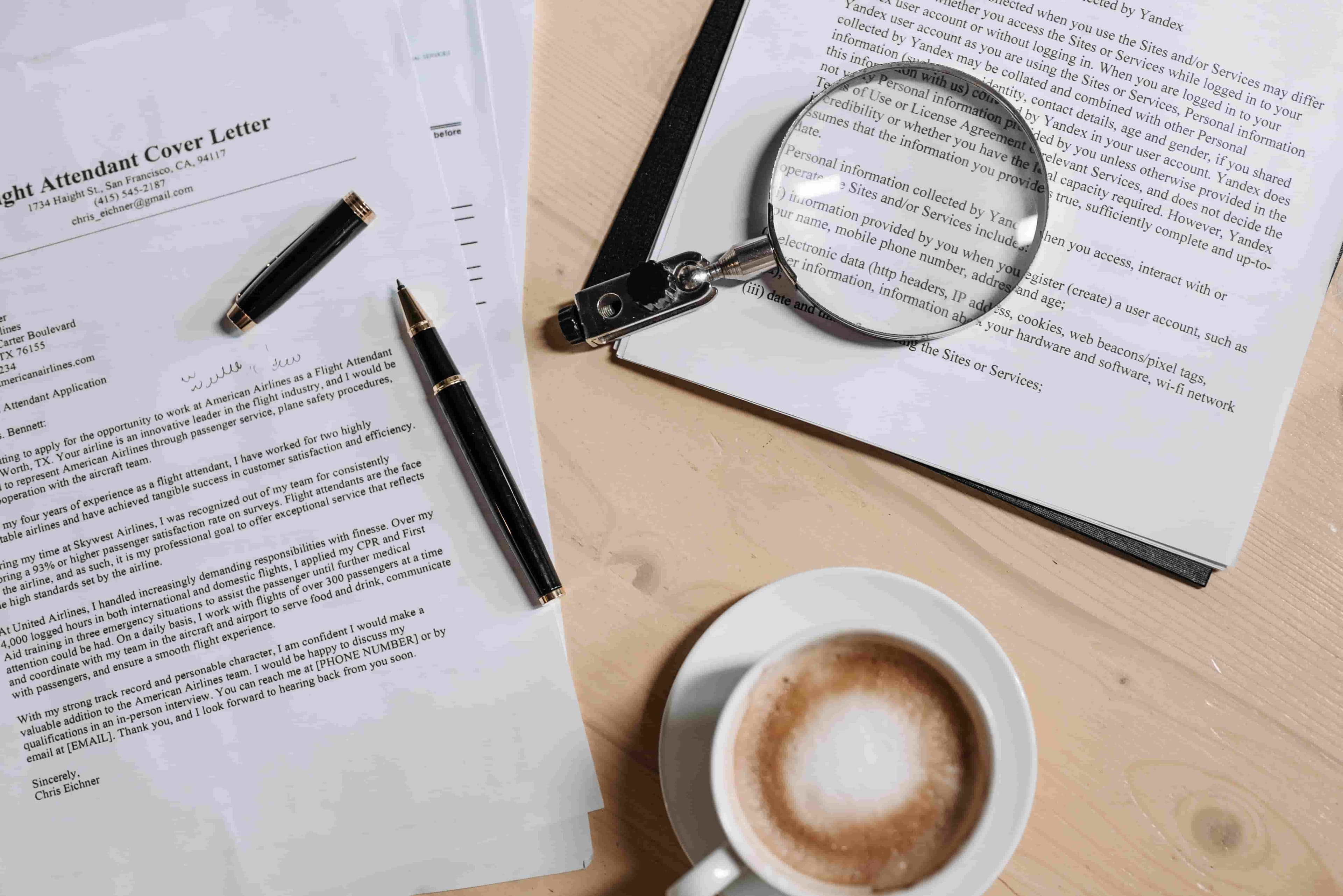
A personal statement is a short, concise professional summary at the top of your CV that outlines your background, strengths and suitability for a role.
You can think of it as a snapshot that answers three simple questions as quickly as possible:
- WHO are you professionally?
- WHAT added value can you bring to the organisation?
- WHY are you a strong fit for the role?
It is also one of the very first bits of information recruiters, hiring managers and HR professionals see and utilise as a kind of 'litmus test' to help them decide whether the rest of your CV is worth their time.
There's also the fact that recruiters have to sort through a mountain of CVs every day. Divide that time across the volume of applications and you are looking at mere seconds per CV. That alone should be enough reason to put some time and effort, of course next to creating a great CV into getting your personal statement right.
Now, with all that said, it is also worth clarifying what a personal statement is not. It is not your life story, it is not a summary of every job you have ever had, and it is definitely not the same thing as a cover letter.
How Long Should a CV Personal Statement Be?
To keep your CV personal statement concise and effective, it should be between three and five lines long (roughly 50 to 100 words) and written as a single paragraph.
Is a Personal Statement on a CV Necessary?
A CV personal statement is not a mandatory component of a CV. There is no hard rule about whether it should be included or not, and many people have managed to land jobs without one.
However, there is a strong case for including one if you're a graduate, first-time job applicant or career changer whose background may benefit from additional context early on.
Generally speaking, it is much safer to include one, given that you are likely competing against hundreds of other job-seekers.
If you think about an email subject line, a news headline or even the shop window of a brick-and-mortar store, that is pretty much how a personal statement works. Its job is not to tell the whole story, but at the very least to grab a recruiter's attention, which after all is the first step towards getting the rest of your CV read.
How to Write a Great Personal Statement for a Job

What Information to Include in a Personal Statement
So what do recruiters look for in a personal statement?
- Professional identity: Your current role, experience level, and specialisation (e.g. Remote Operations Coordinator with 4+ years in logistics).
- Relevant skills: The core capabilities that match the job description (e.g. CRM tools, stakeholder management, data reporting).
- Key achievements: Specific, measurable outcomes (e.g. 'reduced processing time by 30%' or 'managed 80+ client accounts') achieved.
- Role alignment: Provide a clear link between what you can offer and the employer's needs.
- Career direction or goal: The type of role you are targeting, what you want to achieve in it, and how it aligns with your professional growth.
Tips to Make Your Personal Statement Stand Out

Knowing what to include is one thing, but getting a recruiter to notice and finish through your CV is another. Below are some ways to make that happen.
- Focus on what the employer needs: While your experience matters, employers are ultimately trying to solve a problem. Use your personal statement to show how your skills and experience can address that need.
- Use keywords from the job description: Recruiters, as well as Applicant Tracking Systems (ATS), often scan for relevant terms when screening applications. Hence, it is a good idea to mirror the language used in the job post where it accurately reflects your skills and experience.
- Use figures to back up claims: Percentages, revenue impact, project scope, team size or measurable results. All these make achievements more tangible and measurable. At the same time, such specificity makes you a lot more credible in the eyes of recruiters.
- Tailor it to each application: Each organisation has its own priorities and hiring needs. As such, your personal statement should not be a static paragraph copied across every application, but an evolving summary that reflects the role and employer you're applying to.
- Focus on value, not responsibilities: Listing duties is easy; anyone can do that! Shift your focus from what you were assigned to do to what changed because of your work.
- Keep it concise, scannable and direct to the point: Always keep in mind your CV is just one of hundreds in a recruiter's queue. If they cannot quickly understand your value in a single glance, they'll move on without reading further.
- Use active voice: 'Increased sales by 30%' sounds much stronger and more impactful than 'Sales were increased by 30%'
- Check grammar and spelling: As much as misspellings and typos seem minor, small errors can create a disproportionately negative impression, often being tied to poor attention to detail.
- Read it aloud: This technique helps you catch awkward phrasing and missing words.
- Write your personal statement last: Despite your personal statement sitting at the top of your CV, it should be written last. In this way, you can pull the strongest, most relevant points from your CV and align them directly with what unique qualities or skills the employer is looking for.
Common Mistakes to Avoid When Writing Your Personal Statement

You may already have the do's covered, but avoiding these common don'ts is equally important in ensuring your CV makes the right impression.
Generic vocabulary: While not inherently wrong, it reduces your personal statement to something indistinguishable from the rest. More importantly, it offers no concrete basis for recruiters to evaluate your fit. A few examples (though I could definitely list many more) include:
- hardworking individual
- team player
- highly motivated
- results-driven
- fast learner
Clichés: Much like generic vocabulary, clichés weaken credibility and, in many cases, only make your personal statement longer without any added value. Some of the most common cliches in personal statements include:
- Thinking outside the box
- Works well under pressure
- Go the extra mile
- Proven track record of success
- Strong work ethic and dedication
Adding irrelevant information: Anything that does not directly support your fit for the role only creates distraction and dilutes clarity. As such, steer clear of life stories, hobbies and other details that are not relevant to the position.
Focusing only on what you want: Recruiters hire because they have a need to fill. If your personal statement focuses entirely on what you want from the role without addressing the value you can bring, you're giving them little reason to keep reading.
Inventing or exaggerating achievements: Some people may get away with fabricated credentials and just 'fake it till they make it'. However, doing so risks damaging your professional reputation once those claims come under scrutiny.
Personal Statement CV Examples
Personal Statement Example for a First Job
"School leaver with part-time retail experience handling customer enquiries and processing transactions in a fast-paced store environment. Maintained 100% cash handling accuracy while supporting daily operations. Seeking an entry-level customer service role where I can contribute to a positive customer experience and continue building practical skills."
Personal Statement Example for a Graduate CV
"Marketing graduate with experience managing social media campaigns for university-led projects, increasing engagement by 39% within three months. Created and scheduled content, tracked performance using analytics tools, and adjusted posts based on data collected. Seeking a junior marketing role where I can support campaign performance and contribute to measurable growth."
Personal Statement Example for a Part-Time Job
"Retail assistant with 2+ years' experience in high-street store environments handling customer enquiries, transactions and product displays. Consistently exceeded weekly sales targets by up to 17% while maintaining strong customer interactions on the shop floor. Seeking a flexible part-time role where I can support and increase sales performance."
Personal Statement Example for a Remote Job
"Remote Customer Support Specialist with 4+ years' experience handling email and live chat enquiries for SaaS companies, resolving 50+ tickets daily with a 95% satisfaction rating. Experienced in managing customer issues across different time zones and maintaining consistent response times. Seeking a fully remote support role where I can handle high ticket volumes and maintain strong satisfaction ratings."
Personal Statement Example for an Apprenticeship
"Practical and motivated school leaver with a strong interest in electrical engineering, supported by coursework and hands-on school projects. Demonstrated problem-solving skills through building and testing basic circuits with consistent accuracy. Looking to secure an apprenticeship where I can develop technical skills while contributing to real-world projects."
Personal Statement Example for an Experienced Professional
"Senior Project Manager with 8+ years' experience delivering digital transformation projects across finance and e-commerce, managing budgets up to £2M and cross-functional teams of 17+. Delivered 20+ projects on time and within budget, improving operational efficiency by up to 32%. Seeking a leadership role within a delivery-focused environment where I can lead complex programmes and support strategic project execution."
Can I Use AI to Write My Personal Statement?

Yes you can, but I would recommend against it for three reasons.
First, simply prompting it to 'create a personal statement for my CV' would get you very generic, cliché output, which means your statement risks looking like everyone else's.
Which leads to number two: you'll spend time editing to move it from generic to specific. You could try more detailed prompts with better inputs, but either way, it will take time.
Third, you run the risk of hurting your entire CV. Why? Remember that your personal statement is the first thing up on your CV. A copy‑pasted AI paragraph can create a poor first impression that pushes the rest of your application into the reject pile.
That said, write the first version yourself – it is called a 'personal' statement after all.
Below are things you can use AI for:
- Brainstorming
- Detecting grammatical and typographical errors
- Identifying relevant keywords
- Generating variations
Avoid using AI for:
- Generating the final version without edits
- Inventing achievements
Frequently Asked Questions
How Do I Write a Personal Statement With No Experience?
Focus on transferable skills, education and any practical exposure (e.g. projects, volunteering, part-time work). Even without formal experience, you can show relevance through what you've done and how it applies to the role.
Can a Personal Statement Be One Sentence?
Chances are, one sentence will not be enough to showcase your experience, relevant skills and career direction clearly. Personal statements are typically three to four lines long. This length strikes the perfect balance between substance and brevity, so make the most of it.
Is a CV personal statement and a cover letter the same?
No. A personal statement is a short professional summary at the top of your CV, while a cover letter is a separate document that explains your application in more detail. Each serves a different function, and as such, one cannot replace the other.
Can I use the same personal statement for every job application?
You can, but you should not. The point of a personal statement is to concisely communicate your value and how you can address the employer's specific needs – and that requires some degree of tailoring. Even a slight adjustment is often enough, as long as it reflects the role and organisation you're applying to.